Risking Old Age in America: The Coming Elder Care Crisis
In just five years, the oldest of the 65 million baby boomers in the United States will begin reaching their late 80s, the age at which people are more likely to need care. At the same time, most younger baby boomers have already left the workforce, many without enough money to pay for retirement, much less their future care needs. In this podcast, I talk with experts in the fields of aging and elder care about what this will mean for the nation and how we can prepare, both collectively and individually.
More on Harry Margolis: https://margolisbloom.com/harry-s-margolis/
Harry’s Substack: https://okayboomer.substack.com/
Listen on:

Episodes

Oct 2, 2026
Oct 2, 2026
30 min
Harry interviews Boston College law professor Ray Madoff about her book, The Second Estate, arguing the U.S. tax system shifted over the past 40 years to tax wages effectively while letting investment gains and inherited wealth largely escape taxation. She explains how post-1982 stock buybacks increased untaxed appreciation, how gains can be avoided through borrowing and the step-up in basis at death, and how capital gains face lower rates than wages. Madoff says the estate tax functions as political “cover” because loopholes have proliferated since 1990 after a “death tax” campaign, yielding only $28 billion despite $55 trillion held by the richest 1%. She proposes taxing capital gains at transfer or death (as in Canada), ending income-tax exclusions for large inheritances and gifts, and removing tax subsidies for political giving via 501(c)(4)s, while noting wealth taxes face valuation and constitutional issues.
Topics
01:49 How Taxes Were Designed
02:59 Wages vs Wealth Shift
03:57 Stock Buybacks Explained
06:28 Borrowing and Step Up
08:00 Capital Gains Rate Gap
09:02 Estate Tax Quiet Quitting
13:24 Debt and Deficits Pressure
14:22 Dark Money Tax Subsidy
16:21 Fixing Income and Inheritance
20:37 Why Wealth Taxes Struggle
22:51 Valuation and Enforcement
24:42 Traction and Strange Allies
26:28 Public Misconceptions to Watch
28:58 Wrap Up and Book Plug

Sep 8, 2026
Sep 8, 2026
33 min
Harry interviews Nicole Jorwic, Chief Program Officer at Caring Across Generations, about the challenges facing unpaid family caregivers and the paid direct care workforce. Jorwic explains that unpaid caregivers contribute about $1.1 trillion annually, while the largely female, heavily immigrant direct care workforce faces low wages, limited benefits, and unstable jobs—creating a system where care is both underpaid and unaffordable. She argues Medicaid funds over 70% of direct care wages and warns that the nearly trillion-dollar Medicaid cuts in the One Big Beautiful Bill Act, including work requirements, will increase red tape, strain state systems, reduce provider rates, and worsen waiting lists and caregiver burden. The conversation covers strengthening wages and career pipelines, adding a home care benefit to Medicare (“Medicare at Home”), making Medicaid home- and community-based services mandatory, and exploring payroll-tax models like WA Cares. Jorwic urges families—especially baby boomers—to start planning conversations and highlights CareConversations.com.
Topics
02:00 Who Provides Care
02:43 Caregiver Challenges
04:44 Medicaid Funding Squeeze
06:03 Congress Cuts Fallout
08:45 Work Requirements Red Tape
13:30 Strengthening Care Jobs
15:33 Supporting Family Caregivers
18:29 Paying Family Caregivers
20:15 Credits and Tax Relief
22:07 Future Workforce Crunch
24:15 Fixing the Cost Paradox
26:25 Three Leg Policy Plan
28:37 Public Support and Hope
31:00 Top Policy Priority
32:36 Start Care Conversations

Aug 19, 2026
Aug 19, 2026
30 min
Harry interviews Robert Espinoza, founder of the CareWorks Project, about improving long-term care quality and delivery. Espinoza describes his 16-year career in the sector and argues the U.S. long-term care system was designed as an extension of hospitals, despite most care now occurring at home and people wanting person-centered, dignified support. They discuss affordability, citing annual median costs ranging from about $75,000 for home personal care to $170,000 for a private nursing home room, and an estimated $563 billion spent on long-term services and supports in 2023, alongside major unpaid and opportunity costs, including over $1 trillion in unpaid family caregiving. Espinoza warns of worsening workforce shortages, with high turnover and over nine million openings needed, and advocates for a federal social insurance program, stronger state experimentation, and more proactive immigration policy. He outlines CareWorks services in advising, program design, narrative change, and leadership support.
Topics
00:35 Robert’s Care Journey
03:09 Why Care Feels Institutional
04:54 Affordability and Hidden Costs
08:51 Unpaid Caregiving Economy
10:53 Crisis Becoming Catastrophe
12:43 Workforce Shortage Reality
14:04 Social Insurance Solutions
16:52 States vs Federal Action
18:42 Vesting and Social Contract
23:07 What CareWorks Project Does
25:34 Policy Ask Immigration Reform
27:56 Advice for Families
30:06 Closing Thanks

Aug 5, 2026
Aug 5, 2026
33 min
Harry interviews Greg Olsen, longtime director of the New York State Office for Aging, about preparing for a surge in older adults as baby boomers reach 85. Olsen explains the Office for Aging’s role as the community-based, non-medical long-term care system created under the Older Americans Act, providing services such as meals, transportation, personal care, home modifications, benefits help, and case management to help people remain independent and avoid costly institutional care; Governor Hochul has invested $238 million in these services. He describes New York’s Master Plan for Aging as a cross-agency, public-driven process to combat ageism, support healthy aging, and strengthen supports for those needing assistance, citing extensive stakeholder engagement and examples like caregiver supports, food-as-medicine, an office for older workers, expanded NORCs, hospice access efforts, benefits coordination, and fraud prevention. Olsen urges federal policymakers not to cut Medicaid and other supports, and advises families to plan early, understand who pays for care, seek help before crises, and focus on prevention to reduce dementia risk.
Topics
00:52 Meet Greg Olsen
02:00 What the Office Does
03:34 Accessing Services
04:10 Why It Feels Hidden
04:52 Why a Master Plan
05:58 Older Adults Economic Value
06:56 How the MPA Was Built
09:25 Goals and Focus Areas
11:32 Prevention and Culture Shift
13:19 Medicare vs Medicaid Reality
14:23 Costs and What to Change
15:21 Housing and Community Design
18:47 Managing 100 Proposals
20:44 MPA Wins and Examples
24:06 Advice for Other States
27:07 Federal Policy Ask
30:37 Advice for Families
32:18 Closing Thanks

Jul 22, 2026
Jul 22, 2026
35 min
Professor Israel (Issi) Doron, a lawyer and gerontology scholar from the University of Haifa and visiting professor at UMass Boston, describes how an AARP Legal Counsel for the Elderly internship in the early 1990s led him into elder law, followed by a PhD in Toronto on elder guardianship and international work promoting a UN human rights convention for older persons. He explains that older persons lack a dedicated UN convention, notes gaps such as limited recognition of age discrimination and ageism, and recounts recent progress from the Open-Ended Working Group to the Human Rights Council’s active drafting process, which he attended in Geneva. Doron compares Israel and the US: Israel has universal healthcare and a social-insurance community long-term care benefit (about 20+ weekly in-home hours for most), relies on family care plus paid workers (including migrants), and uses needs-based institutional coverage with filial responsibility; Israel also has widespread private long-term care insurance. He highlights Israel’s younger median age due to high fertility but high life expectancy and strong family support, says Arab Palestinians receive the same entitlements, and recommends universal healthcare for US policy and proactive legal/financial planning for families.
Topics
00:00 Meet Professor Doron
01:41 From Human Rights to Elder Law
03:33 Why a UN Convention Matters
06:18 Will It Affect the US
08:54 How Elder Care Works in Israel
14:52 Who Provides Home Care
19:11 When Care Needs Increase
25:13 Demographics and Family Support
28:32 Arab Israelis and Elder Care
30:57 Advice for Policymakers and Families
35:06 Closing Thanks

Jul 9, 2026
Jul 9, 2026
33 min
Chia Lin-Simmons, CEO of LogicMark, describes becoming a “sandwich generation” caregiver after her experience with an embarrassing, imprecise, unattractive medical alert worn by her mother-in-law, motivating her to modernize the category with AI and IoT. Drawing on 30 years in tech (including Harman, Audible, Google, and an AI startup), she explains LogicMark’s shift from reactive fall alerts to more precise multi-sensor detection and predictive, proactive monitoring using longitudinal data, digital twins, and pattern analysis to anticipate risks. Data is shared via caretaker apps that create a “care village” including family, neighbors, and professionals. She highlights product design to reduce stigma, adding features like cameras, GPS/geofencing, and smaller phone-like form factors. The conversation covers caregiver shortages, enterprise integration, non-wearable sound-based devices, and policy priorities: veterans’ health support, Medicare/Medicaid coverage for enabling tech, and immigration to bolster the care workforce, plus advice for boomers to adopt safety tech, declutter, and plan early.
Topics
02:10 The Ramen Alarm Moment
03:51 Beyond Ive Fallen
06:32 Digital Twins Prevention
10:27 Care Village Apps
11:42 Design Seniors Will Wear
15:46 Future Of Aging Tech
21:24 AI Supports Human Care
27:08 Policy And Personal Advice
31:23 Family Stories And Wrap

Jun 24, 2026
Jun 24, 2026
35 min
Harry interviews Ryan Frederick, founder and CEO of Here and author of ‘Right Place, Right Time,’ about how where you live influences quality of life, health, longevity, finances, and social connection—especially in the second half of life. Frederick explains his path from Silicon Valley to senior housing and writing the book during the pandemic, concluding that people lack a framework to evaluate “place.” He defines place through four quadrants—environment, health, community, and finances—and stresses that people choose “micro places” that shape daily life. He describes “place planning” as an intentional process that may or may not involve moving, emphasizing agency in how you engage your home and community and encouraging experimentation before major changes like relocating or moving abroad. The conversation addresses aging in place, senior living options, zoning barriers to downsizing within one’s community, and policy ideas such as increasing accessible housing supply and reducing tax frictions that discourage older adults from moving.
More on Ryan: https://www.ryanfrederick.life/
Ryan’s book ‘Right Place, Right Time’: https://a.co/d/0hXfYGXs
Topics
00:44 Ryan Frederick Origin Story
02:57 Writing Right Place Right Time
05:50 Four Quadrants of Place
08:11 Micro Places and Connection
09:30 What Is Place Planning
11:26 Intentionality and Agency
15:02 Aging Health and Longevity
19:01 Rethinking Aging in Place
21:09 Senior Living Options
22:31 Zoning and Housing Supply
24:13 Moving Abroad and Life Chapters
29:00 Policy Fixes for Better Housing
32:29 Advice to Boomers Plan Ahead
34:32 Closing Thoughts

Jun 10, 2026
Jun 10, 2026
35 min
Anthony Zizza, a geriatrician and chief medical officer at Element Care PACE, describes his career from Beth Israel Deaconess and Harvard to Landmark Health, a mobile interdisciplinary house-calls group serving the top 5% of complex Medicare Advantage patients, and why PACE was a natural next step. He explains PACE (Program of All-Inclusive Care for the Elderly) as a Medicare/Medicaid model for adults 55+ who are nursing-home eligible but can live safely in the community with support, offering an integrated package including primary care, transportation, therapies, social work, adult day health, home services, palliative and urgent care, and even long-term care when needed, with examples like providing an air conditioner to prevent COPD exacerbations. The conversation covers eligibility (service area, ADL dependence, dual eligibility, asset limits and look-back), Medicare-only/private pay options, limited geographic availability and heavy regulation, overlap and for-profit expansion, and policy recommendations to expand access earlier and simplify enrollment.
Topics
02:06 Landmark Health House Calls
03:58 Why Landmark Ended
05:20 PACE Explained Basics
06:42 PACE Services and Team
08:04 Outside the Box Care
09:34 Costs and Long Term Care
12:35 Eligibility and Enrollment
16:43 Coverage Areas and Red Tape
18:56 For Profit Growth Debate
20:08 Element Care Mission Stories
23:24 Finding a Local PACE
28:26 Policy and Family Advice
30:43 Criticisms and Risk Adjustment
34:47 Closing Thoughts

May 27, 2026
May 27, 2026
28 min
Harry talks with historian Daniel Horowitz, author of “On Retirement: How Aging Is Transforming American Lives.” He discusses his wide-ranging prior work and his move with his historian wife to a continuing care retirement community near their daughter. He describes major changes in aging and retirement since midcentury: longer lifespan and healthspan, key policy supports (Social Security, Medicare, Medicaid), and a shift from defined-benefit to defined-contribution retirement risk. He outlines expanding housing and care arrangements (NORCs, supplemented NORCs, 55+ communities) alongside problems like nursing-home conditions and under-studied elderly homelessness, emphasizing how race, class, gender, and geography shape wealth, access, and even a nine-year longevity gap by income. He explains “successful aging” and critiques its optimism amid inequality, pandemics, and climate threats, stressing luck and fall risks. His personal advice centers on sustaining social connections, not comparing oneself to the past, protecting public programs, and skepticism toward costly longevity clinics and promises of living to 120.
Get Daniel’s book: https://a.co/d/07sy46s8
Topics
00:00 Meet Dan Horowitz
01:02 Books and Background
02:08 Moving to a CCRC
03:32 Retirement Then and Now
05:50 Housing Options and Risks
06:50 Inequality in Aging
10:18 Successful Aging Debate
13:36 Renewal Retirement
16:07 Isolation and Community Design
18:38 Personal Keys to Aging Well
22:02 Policy Advice for Boomers
23:19 Longevity Hype and 120
26:18 Public Health Over Biohacks
May 6, 2026
May 6, 2026
36 min
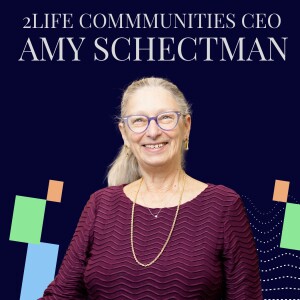
Amy Schectman, CEO of 2Life Communities, explains 2Life’s mission to provide affordable, purpose-filled aging through deeply affordable housing and advocacy, and describes Opus Newton, a continuing care retirement community for the “missing middle” who earn too much for subsidies but can’t afford luxury options. She contrasts NewBridge’s high-income model with mixed-income Brown House and explains 2Life’s “optimal aging” components: lifetime affordability, social connection, and help navigating home and healthcare systems via care navigators and varied programming. Opus Newton keeps monthly fees low through a home-sale-funded upfront fee that eliminated construction debt, resident volunteerism (10 hours/month), shared overhead with adjacent affordable Coleman House and JCC partnerships, and flexible home care through Houseworks. Amy urges earlier moves, replicating the model, expanding supply, and shifting policy messaging from “aging in place” to “aging in community,” citing improved longevity and health outcomes and reduced public costs.
Topics
01:04 Meet Amy Schectman
02:00 Three Models Compared
04:42 What Optimal Aging Needs
07:13 Care Navigators Explained
08:19 Resident Led Culture
10:37 Making Opus Affordable
13:41 Shared Campus Partnerships
15:16 Home Care Without Waste
17:17 Why Size Matters
18:21 Demand And Waiting Lists
18:48 Finding Space to Grow
19:28 Community Gives Back
20:03 Scaling the Missing Middle
21:28 Market Model Requirements
22:48 Retirement and Next Steps
23:18 Move Before You Must
25:24 Louise and Bridge Club
28:22 Advice for Boomers
28:46 Policy Supply and Messaging
30:47 Longevity Proof Points
32:40 Efficiency and Cost Savings
33:38 Lessons from the Netherlands
34:40 Long Term Care Insurance
35:20 Closing and New Site